
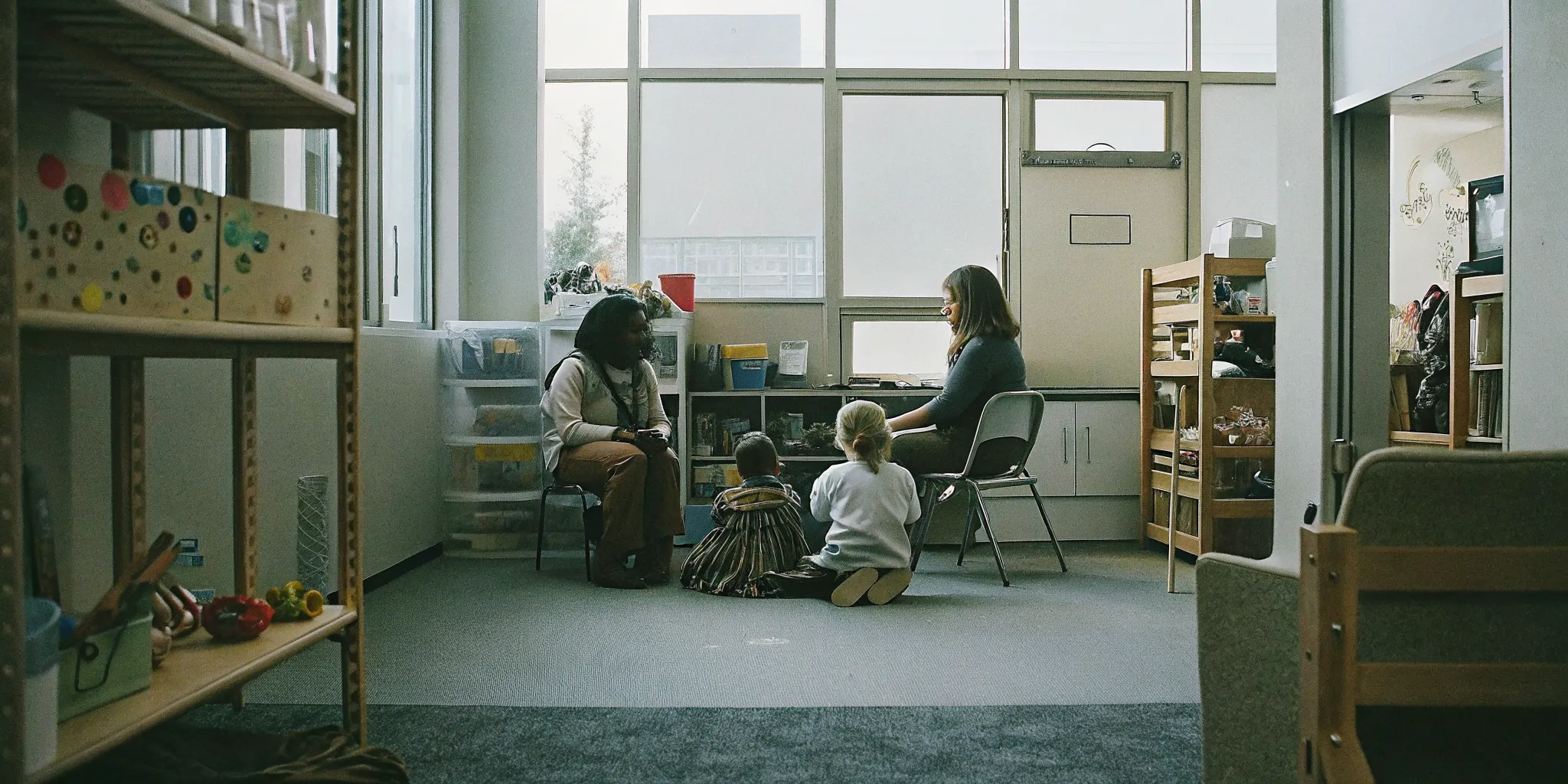
Your child may have a lot to say without having the words to say it. A sudden outburst, a quiet withdrawal, or the same pretend scene repeated with toys can leave a parent wondering what is happening underneath. Play therapy Fairfax VA providers offer children a developmentally appropriate way to communicate, build trust, and practice new skills through play.
Contact Renewal of the Mind to ask whether play therapy may fit your child’s needs.
For a child, play is not a break from serious work. It is one of the main ways they explore relationships, express feelings, and make sense of experiences. A therapist can use that familiar language while maintaining a safe, supportive relationship. This guide explains what parents may see during early sessions, how to prepare, and what to ask a provider.
What is play therapy?
Play therapy is a mental health approach that uses play as a primary form of communication and learning. Rather than expecting a child to explain every thought directly, a therapist may offer toys, art materials, stories, games, or movement. The child’s choices and responses can help guide the work.
The Association for Play Therapy describes play therapy as the systematic use of a theoretical model to help trained play therapists prevent or resolve psychosocial difficulties. This distinction matters. Therapeutic play is intentional care from a qualified provider, not simply free time with toys.
Why children often communicate through play
Many children can name simple feelings but struggle to describe mixed emotions, stressful events, or relationship problems. Pretend play lets them create distance from a hard subject. A child can show concern through a puppet, family figure, drawing, or story before discussing it more directly.
A therapist pays attention without treating one toy choice as proof of a specific problem. Instead, the provider considers repeated themes, the child’s developmental stage, family context, and information from caregivers. Over time, this broader picture may help the therapist and family set useful goals.
What play therapy may support
Families may consider play therapy when a child is having difficulty with emotions, behavior, relationships, transitions, or stressful experiences. Sessions may focus on skills such as identifying feelings, tolerating frustration, solving problems, or communicating needs. The exact goals should reflect the individual child rather than a standard checklist.
Play therapy does not guarantee a particular result, and it is not a substitute for medical or emergency care. A licensed professional can help determine whether this approach, another service, or a coordinated plan is appropriate.
What happens in the first play therapy sessions?
Early sessions usually focus on understanding the family, creating emotional safety, and deciding what the work should address. The exact sequence varies by provider, the child’s age, and the family’s circumstances. Parents should ask the therapist to explain their process before care begins.
The caregiver consultation
A provider may first meet with a parent or caregiver without the child present. This gives adults space to discuss concerns, family history, strengths, recent changes, and hopes for therapy. The therapist may also ask about school, friendships, health, culture, language, and previous care.
Parents can use this conversation to describe what they see without labeling the child. Specific examples are especially helpful. For instance, explain when a behavior began, what tends to happen beforehand, and what helps afterward. This information gives the provider context while keeping the child from feeling blamed.
Your child’s introduction to the playroom
During the child’s first visits, the therapist may explain the room and its boundaries in simple language. The child might explore toys, choose an activity, draw, tell a story, or take time to observe. A hesitant start does not mean that therapy is failing. Trust can take time.
The therapist may follow the child’s lead or introduce a structured activity. Either approach can be appropriate when it matches the provider’s model and the child’s needs. Parents can ask why a particular approach is being used and how it relates to agreed goals.
Goal setting and parent updates
After gathering enough information, the therapist and caregivers can discuss goals and a plan for reviewing progress. Useful goals are specific and meaningful to daily life. Examples might include using words to request a break or recovering more calmly after frustration.
Parents should also learn how updates will work. A therapist needs to protect the child’s privacy while keeping caregivers involved in care. Providers can often discuss patterns, goals, safety concerns, and ways to support the child without reporting every detail of play.
What might a child do during play therapy?
A play therapy room may contain figures, dolls, puppets, art supplies, building materials, sensory items, games, or a sand tray. The materials can give children several ways to communicate. Not every provider uses the same tools, and not every child responds to the same activity.
Child-led and structured activities
In child-led work, the child chooses how to use available materials while the therapist responds and maintains safe limits. This can offer room for expression, decision-making, and relationship building. In more structured work, the therapist may select an activity to practice a particular skill or explore a defined topic.
A session can include both styles. For example, a child may begin with independent pretend play and later join a simple game about recognizing feelings. The therapist’s training and treatment plan should guide these choices.
Repetition can be part of the process
Children sometimes repeat the same game, story, or arrangement across several sessions. Repetition can help a child explore an idea, practice a response, or gain a sense of predictability. Parents do not need to interpret the scene on their own.
If you have questions about repeated play, ask the therapist what can be discussed within appropriate privacy boundaries. Avoid pressing your child to explain or perform progress after each visit. A calm, interested response can make it easier for the child to share when ready.
How can parents prepare a child for play therapy?
Preparation can lower uncertainty without placing pressure on the child. Keep the explanation truthful, brief, and appropriate for their age. Your therapist may offer specific language based on the child’s needs.
Use simple, neutral language
You might say your child will meet a helper who uses talking and play. Tell your child when the visit will happen and who will bring them home. Avoid promising that every session will be fun or that a problem will disappear quickly.
It is also helpful to make clear that therapy is not a punishment. Children can mistakenly believe they are attending because they did something wrong. Emphasize that many families get help and that the therapist’s job is to support them.
Make the day manageable
If possible, leave enough travel time so the family does not arrive rushed. Bring any forms or information requested by the provider. Comfortable clothes may help if the session includes floor play or art. Ask the office before bringing a favorite toy, snack, or comfort item.
Let the child decompress afterward
After a session, use a gentle invitation rather than a detailed interview. You might say, “I’m glad to see you. Is there anything you want me to know?” If the child does not want to talk, allow some quiet time. Share questions or concerns directly with the therapist rather than asking the child to carry messages.
Have questions about the first visit? Reach out to Renewal of the Mind before scheduling.
Questions to ask a play therapy provider in Fairfax, VA
The relationship between the child, caregiver, and therapist is important. An introductory call can help you understand the provider’s experience, communication style, and approach. It can also clarify practical details before you commit to ongoing visits.
Ask about qualifications and approach
- What is your license or supervised professional status?
- What training and experience do you have in play therapy?
- Which ages and concerns do you commonly work with?
- How do you decide between child-led and structured activities?
- How do you adapt care for a child’s culture, language, or developmental needs?
A provider should explain their scope clearly. If the clinician practices under supervision, ask how that supervision supports care. You can also ask how the therapist coordinates with pediatricians, schools, or other professionals when written permission is provided.
Ask how caregivers participate
- How often will caregivers receive updates?
- How will we set and review goals?
- What information stays private between the child and therapist?
- How will you tell me about a safety concern?
- What can we practice or reinforce at home?
The answers should help you understand both your role and the child’s privacy. Clear expectations at the beginning can prevent confusion later.
Confirm logistics
- Do you offer in-person sessions, telehealth, or both for this age?
- Which insurance plans do you accept, and how are benefits verified?
- What are your cancellation and rescheduling policies?
- What should we do if my child needs urgent support between appointments?
For an immediate safety emergency, call 911 or go to the nearest emergency department. Therapy office communication channels may not be monitored continuously.
How does play therapy compare with other child therapy approaches?
Play therapy is one option within child mental health care. The right approach depends on the child’s age, communication style, goals, experiences, and clinical needs. A qualified professional may use one model or integrate several evidence-informed methods.
| Approach | Common focus | What parents can ask |
|---|---|---|
| Play therapy | Communication and skill-building through play | How does play connect to my child’s goals? |
| Talk-based therapy | Verbal reflection and problem-solving | Is my child ready to discuss concerns directly? |
| TF-CBT | Structured support for children affected by trauma | Does the provider have training in this model? |
| Art therapy | Expression and exploration through art-making | What credentials and methods does the provider use? |
Some children affected by trauma may benefit from a structured model such as trauma-focused cognitive behavioral therapy. Others may connect more readily through play or art. An assessment can help a provider recommend an approach and explain the reasoning.
How can parents support progress between sessions?
Parents do not need to become therapists at home. Consistent routines, curious listening, and calm boundaries can support the work while preserving the parent-child relationship. Ask the therapist which strategies fit your child’s plan.
Notice effort and skills
When your child uses a new coping or communication skill, describe what you noticed. You might say, “You told me you needed a break before things got too hard.” Specific observations can reinforce growth without turning every moment into an evaluation.
Share useful patterns with the therapist
Let the provider know about major changes, new concerns, and examples of progress. Brief notes about when a challenge happens can be more useful than a general statement that the week was difficult. Ask the therapist how they prefer to receive updates.
Review the plan when needs change
Therapy goals can change as a child grows or circumstances shift. Caregivers and providers should periodically review what is helping and what needs adjustment. If you are uncertain about the plan, ask for a conversation rather than waiting until frustration builds.
Frequently asked questions about play therapy Fairfax VA
Does play therapy mean a child only plays during sessions?
No. Play is used intentionally within a therapeutic relationship. A provider may also talk with the child, teach a skill, involve caregivers, or use structured activities based on the child’s goals and developmental needs.
How long does play therapy take?
There is no single timeline that fits every child. Length and frequency depend on the child’s needs, goals, attendance, family circumstances, and response to care. Ask the provider how progress will be reviewed and when the plan may be adjusted.
Will parents know what happens in each session?
Therapists balance caregiver involvement with the child’s need for privacy. Parents can usually expect discussion of goals, broad themes, progress, safety concerns, and helpful strategies. Ask the provider to explain their communication policy at the start.
Can play therapy be used with trauma-focused care?
A trained provider may use developmentally appropriate play while delivering trauma-informed or structured treatment. The approach should match the child’s assessment and goals. Ask about the therapist’s specific training and how each activity supports the care plan.
Talk with a Fairfax child therapy provider
Choosing support for your child can bring both hope and uncertainty. Renewal of the Mind offers child play therapy services and other counseling options for families in Fairfax and Northern Virginia. A conversation with a provider can help you ask questions, understand available services, and consider an appropriate next step.
Contact Renewal of the Mind to discuss play therapy in Fairfax, VA.
Healthcare disclaimer: This article is for general educational purposes and is not a diagnosis or a substitute for individualized medical or mental health advice. A qualified professional can assess your child’s needs and recommend appropriate care. If you believe your child is in immediate danger, call 911 or go to the nearest emergency department.