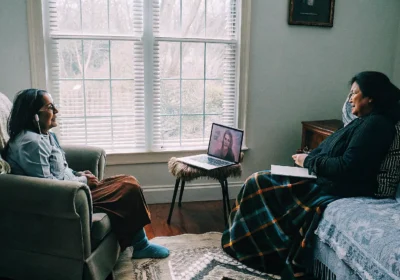

What if you could reduce your OCD symptoms by over 40% without ever stepping into a therapist’s office? Recent studies on online therapy have shown exactly that, offering powerful evidence for a new way of getting help. While numbers are compelling, the day-to-day reality of OCD is about more than just symptoms; it’s about the constant anxiety and emotional weight that can impact every part of your life. This brings us to the essential question: Can online OCD counselling help reduce compulsions and emotional distress in a way that truly improves your quality of life? The data suggests a clear and hopeful answer, pointing to specific, evidence-based methods that work effectively in a virtual setting.
Ready to Start Your Healing Journey?
Our compassionate team at Renewal of the Mind is here to help — whether you’re navigating anxiety, trauma, relationship challenges, or simply need someone to talk to. We offer in-person and telehealth sessions across Northern Virginia.
Key Takeaways
- Seek out ERP therapy: This hands-on approach is the most effective treatment for OCD because it helps you safely face your fears and break the cycle of compulsive behaviors.
- Use online therapy to your advantage: Virtual counseling makes specialized care more accessible and lets you address triggers in your actual home environment, which can make the therapeutic work more practical and lasting.
- Aim for lasting change: The goal of online OCD therapy is to create long-term resilience, not just temporary relief. You can expect to see a significant reduction in symptoms while also building skills that improve your overall quality of life.
What Is OCD and How Does It Show Up in Daily Life?
Obsessive-Compulsive Disorder (OCD) is a mental health condition that involves a challenging cycle of unwanted thoughts (obsessions) and repetitive behaviors (compulsions). It’s more than just liking a tidy space or double-checking that the stove is off; for someone with OCD, these thoughts and actions can feel uncontrollable and take up a significant amount of time, causing a great deal of distress.
This cycle can interfere with everything from your relationships and social life to your performance at work or school. It can feel isolating and exhausting, but it’s important to know that you aren’t alone and that effective support is available. Understanding the two core components of OCD, obsessions and compulsions, is the first step toward recognizing how it impacts your life and finding a path forward.
Obsessions and Compulsions: What’s the Difference?
It’s helpful to think of obsessions and compulsions as two sides of the same coin. Obsessions are intrusive and persistent thoughts, images, or urges that cause anxiety and distress. You don’t want to have these thoughts, and they often go against your personal values. Common obsessions include fears about contamination, worries about causing harm to yourself or others, or an intense need for things to be symmetrical or “just right.”
Compulsions are the actions you feel driven to perform to relieve the anxiety caused by an obsession. These can be repetitive behaviors like washing your hands, checking locks, or arranging items, or they can be mental acts like praying or counting. The relief is only temporary, which keeps the cycle going. Understanding this pattern is a key part of effective psychotherapy.
How OCD Can Affect Your Emotional Well-being
Living with OCD is emotionally draining. The constant battle against intrusive thoughts and the pressure to perform compulsions can lead to persistent feelings of anxiety, shame, and stress. You might feel isolated because it’s hard to explain what you’re going through, or you may find yourself avoiding situations that could trigger your obsessions, which can shrink your world over time.
This emotional strain often goes hand-in-hand with other conditions. Research shows that OCD frequently co-occurs with depression and anxiety, as the disorder can take a heavy toll on your overall quality of life. The good news is that treatments designed for OCD also significantly reduce these related feelings. For example, studies on Exposure and Response Prevention (ERP) therapy, a form of Cognitive Behavioral Therapy (CBT), show it can lead to major reductions in both depression and anxiety symptoms, helping you regain control.
What Is Exposure and Response Prevention (ERP) Therapy?
If you’re looking for help with OCD, you’ll likely hear about Exposure and Response Prevention, or ERP. This is a specific and active type of psychotherapy designed to help you confront your fears and reduce compulsive behaviors. Think of it as a guided process where you learn to face obsessive thoughts and triggers without turning to the compulsions that have kept you feeling stuck. It’s a collaborative approach where you are always in the driver’s seat, working alongside a therapist who understands the ins and outs of OCD.
The name itself tells you exactly how it works. The “exposure” part involves gradually and intentionally facing the thoughts, images, objects, and situations that trigger your obsessions and anxiety. The “response prevention” part is where you make a choice to not do the compulsive behavior once the anxiety or obsessions have been triggered. It sounds challenging, and it can be, but you do this in a safe, structured way with a supportive therapist. Together, you work to break the cycle, teaching your brain that you can handle the distress without needing the ritual.
Why ERP Is a Leading Treatment for OCD
When mental health professionals call ERP the “gold standard” for OCD, they mean it’s the most effective, research-backed treatment available. It’s a specialized form of Cognitive Behavioral Therapy (CBT) that directly targets the engine of OCD: the cycle of obsessions and compulsions. Instead of just talking about your fears, ERP helps you actively challenge them and change your behavioral responses.
The reason it works so well is that it helps you learn something new on a deep level. According to the International OCD Foundation, ERP helps you face your fears in a safe, guided way. This process, known as habituation, teaches your brain that your anxiety will naturally decrease over time, even if you don’t perform a compulsion. It’s an empowering approach that helps you build confidence and take back control from the disorder.
How Gradual Exposure Helps You Face Fears Safely
The idea of “exposure” can sound intimidating, but it’s important to know that it’s always done gradually and collaboratively. You and your therapist will work together to create a “fear ladder,” which is just a list of your triggers ranked from least scary to most scary. You’ll start with something on the lower end of the ladder, an activity that causes mild anxiety but feels manageable.
You would never be asked to face your biggest fear on day one. Instead, you’ll take small, steady steps, building confidence as you go. For example, if someone has a fear of contamination, a first step might be touching a doorknob and then waiting for the anxiety to subside without washing their hands. This controlled process helps you learn from direct experience that you are safe and that the anxiety, while uncomfortable, will pass.
How to Break the Compulsion Cycle with Response Prevention
Response prevention is the other half of the equation and it’s where the real change happens. After you’ve been exposed to a trigger, the goal is to resist the urge to perform your usual compulsion. Whether your ritual is washing, checking, counting, or seeking reassurance, the aim is to make a conscious choice to not do it. This is the step that effectively breaks the cycle of anxiety and compulsive behavior.
This part is challenging, as you’re sitting with the anxiety without your usual coping mechanism. But with your therapist’s guidance, you learn that the discomfort is temporary and that you are capable of tolerating it. Each time you successfully resist a compulsion, you weaken OCD’s hold on you and prove to yourself that you are in control, not your intrusive thoughts.
How Does Online OCD Counseling Work?
If you’re considering online counseling for OCD, you might wonder how it all comes together through a screen. The process is designed to be just as effective and personal as meeting in an office. Online therapy brings specialized treatment directly to you through secure video sessions, using proven methods to help you manage your symptoms. The leading treatment for OCD is a type of talk therapy called Exposure and Response Prevention (ERP), which works exceptionally well in a virtual setting. ERP therapy helps you gradually face your fears and learn to resist compulsive behaviors.
Your online sessions will feel much like traditional therapy. You’ll meet regularly with a licensed therapist who specializes in OCD, building a supportive and collaborative relationship. Together, you will set clear goals and work through exercises designed to address your specific obsessions and compulsions. The focus is on giving you practical tools and strategies to use in your daily life. Instead of just talking about your challenges, you’ll be actively learning how to change your relationship with intrusive thoughts and reduce the distress they cause. This approach empowers you to take control of your mental well-being from the comfort of your own space.
What to Expect in an Online OCD Therapy Session
Starting online therapy can feel new, but the structure is straightforward and supportive. Each session takes place on a secure video platform, where you’ll meet one-on-one with your therapist. You can expect the sessions to be just as effective as in-person meetings, allowing you to build a strong connection and do meaningful work. Your therapist will guide you through discussions about your thoughts, feelings, and behaviors, creating a safe space for you to explore your experiences without judgment.
A typical session involves checking in on your progress, discussing challenges, and practicing ERP exercises. Your therapist will teach you how to confront your triggers in small, manageable steps. This collaborative psychotherapy process is tailored to you, ensuring you move at a pace that feels right. You’ll leave each session with a clearer understanding of your OCD and actionable steps to practice before your next meeting, helping you build momentum and confidence.
Address Triggers in Your Own Environment
One of the most powerful aspects of online OCD therapy is the ability to work on your triggers right where they happen. Since you’re at home, your therapist can guide you through real-life situations that cause you distress. For example, if you have contamination fears centered on your kitchen, you and your therapist can do an exposure exercise in your actual kitchen. This immediate, real-world application is something traditional office-based therapy can’t always offer.
This approach helps bridge the gap between learning a skill and using it in your daily life. Instead of imagining a scenario, you’re living it with your therapist’s direct support. This form of Cognitive Behavioral Therapy (CBT) makes the therapeutic work more concrete and relevant. By facing fears in your own environment, you build confidence and prove to yourself that you can handle challenging situations as they arise, making your progress feel more tangible and lasting.
Use Digital Tools to Support Your Progress
Online OCD counseling often includes more than just your scheduled video sessions. Many platforms integrate digital tools that help you practice skills and stay connected with your therapist between appointments. These resources are designed to support your progress and keep you engaged in your treatment. For instance, your therapist might share digital worksheets, guided exercises, or mood trackers through a secure app or client portal.
These tools make your therapy more dynamic and accessible. If you have a question or need encouragement, you might be able to send a secure message to your therapist. Some programs also offer access to an online community for peer support, which can be incredibly validating. This continuous support system reinforces what you learn in your sessions and helps you apply it consistently. It’s part of the compassionate, collaborative approach that defines modern mental health care, ensuring you feel supported every step of the way.
Is Online Therapy for OCD Effective?
If you’re considering online therapy for Obsessive-Compulsive Disorder (OCD), you might be wondering if it really works. It’s a fair question, and the short answer is yes, it can be incredibly effective. The key is finding the right approach, and for many, that approach is a specific type of therapy that adapts surprisingly well to a virtual setting. Research and real-world results show that online counseling isn’t just a convenient option; it’s a powerful tool for managing OCD symptoms and reclaiming your peace of mind.
What the Research Says About Online ERP
When we talk about effective OCD treatment, we’re often talking about Exposure and Response Prevention (ERP). This is a specialized form of Cognitive Behavioral Therapy (CBT) designed to help you confront your fears and resist compulsive behaviors. The great news is that studies show this method works very well through online video therapy. One major study found that people who received online ERP saw their OCD symptoms decrease by an average of 43.4%. This isn’t just a small change; it’s a significant reduction that can make a real difference in your daily life, showing that quality care is accessible right from your home.
How Do Online and In-Person OCD Therapy Compare?
It’s natural to think that in-person therapy must be better, but when it comes to OCD, online counseling has a unique advantage. Research suggests it can be just as good, and in some cases, even more effective than traditional sessions. Why? Because you’re doing the therapy in the exact environment where your triggers occur. Your therapist can guide you through exposures in your own kitchen, car, or living room, making the work more direct and relevant. In fact, one study found that some people experienced up to a 40% drop in symptoms in fewer than 12 sessions. Our compassionate approach to therapy focuses on creating this kind of real-world change.
Can Online Counseling Help with Compulsions and Distress?
If you’re dealing with obsessive thoughts and compulsive behaviors, you might wonder if therapy can really make a difference, especially online. It’s a valid question. The good news is that the answer is a resounding yes. Online counseling isn’t just a convenient option; it’s a powerful and effective way to manage symptoms and reclaim your peace of mind. Let’s look at what the research shows and how specific therapies can help you find relief from the comfort of your own space.
The Data on Reducing OCD, Anxiety, and Depression Symptoms
It’s one thing to hear that therapy works, but seeing the numbers can be incredibly reassuring. A significant study on online video therapy for OCD found that people saw major improvements without ever leaving their homes. On average, participants experienced a 43% reduction in their OCD symptoms. Because OCD often walks hand-in-hand with anxiety and depression, the study also tracked those symptoms, finding an average reduction of nearly 48% for anxiety and 44% for depression. These results show that specialized online psychotherapy can be a highly effective way to address the full spectrum of challenges that come with OCD, offering real, measurable relief.
How ERP Helps You Change Compulsive Behaviors
The leading treatment for OCD is a specific type of talk therapy called Exposure and Response Prevention, or ERP. It’s a form of Cognitive Behavioral Therapy (CBT) that helps you directly and safely confront your fears. In ERP, your therapist guides you through gradually facing situations that trigger your obsessions. The second part, “response prevention,” is where you learn to resist performing the compulsive behaviors you’d normally use to cope. This process helps you break the cycle of obsessions and compulsions, teaching your brain that you can handle the anxiety without needing the ritual. It’s a collaborative process aimed at giving you back control.
Improve Your Quality of Life, Not Just Your Symptoms
Reducing symptoms is a huge part of recovery, but therapy is also about helping you build a life you truly enjoy. It’s about getting back to the activities and relationships that matter to you. The same study that showed a drop in symptoms also found that participants reported a nearly 23% average improvement in their overall quality of life. This shows that effective treatment does more than just lessen distress; it helps you experience more fulfillment and engagement in your daily life. Our compassionate approach is centered on this very idea: helping you not only cope but also thrive by gaining the understanding and strategies to live a more meaningful life.
What Are the Benefits of Online OCD Counseling?
If you’re considering therapy for OCD, you might wonder if an online format can truly help. The good news is that online counseling offers some unique advantages that can make treatment more accessible and effective. For many people, it removes the practical hurdles that can make getting to an office difficult, like a long commute or a packed schedule. It also opens up new possibilities for the therapy itself, allowing you to work on challenges in the very environment where they appear.
Choosing to start psychotherapy is a significant step, and you deserve a format that supports you completely. Online counseling provides a path to specialized care that is flexible, private, and tailored to your real-life situations. Instead of adding more stress to your plate, therapy can integrate into your life, helping you build skills from the comfort of your own space. Let’s look at some of the key benefits you can expect when you begin online OCD counseling.
Get Therapy That Fits Your Life and Schedule
One of the biggest advantages of online therapy is its convenience. When you don’t have to factor in travel time, parking, or sitting in a waiting room, it becomes much easier to fit a session into your day. You can connect with your therapist from home, your office, or wherever you have a private internet connection. This flexibility is especially helpful when you’re already managing work, family, and other responsibilities.
Beyond just saving time, studies show that online OCD therapy works well and can be just as effective as meeting in person. You get the same high-quality, evidence-based care without the logistical challenges, making it easier to stay consistent with your treatment and focus on what matters most: your progress.
Find Support in a Comfortable and Private Setting
For many, the idea of discussing personal struggles in an unfamiliar office can feel intimidating. Online therapy allows you to engage in sessions from a space where you already feel safe and comfortable. Being in your own home can help you feel more relaxed and open, creating a strong foundation for a trusting therapeutic relationship. This sense of privacy and comfort is invaluable when doing the deep work required to address OCD.
Even better, doing therapy at home means your therapist can help you deal with your OCD triggers right where they happen. If certain rituals are tied to your kitchen or bedroom, you can work through exposure exercises with your therapist’s live guidance in that exact spot. This real-world application makes the therapy incredibly practical and effective.
Connect with Therapists Who Specialize in OCD
Finding a therapist who is specifically trained in Exposure and Response Prevention (ERP), the gold-standard treatment for OCD, can be challenging depending on where you live. Online counseling breaks down these geographical barriers, giving you access to a wider pool of qualified specialists. You are no longer limited to practitioners in your immediate area, so you can find someone who truly understands OCD and has the right expertise to help you.
Research confirms that online video therapy using ERP is very effective for treating OCD. Having the ability to connect with the right professional is a critical part of successful treatment. It ensures you receive care that is not just supportive but also grounded in proven methods. You can take the time to learn about different therapists and find a provider whose approach feels like the right fit for you.
What to Consider Before Starting Online OCD Therapy
Deciding to start therapy is a huge step, and choosing an online format can make it feel so much more accessible. While the convenience is a major plus, taking a little time to prepare can make all the difference in your experience. Thinking through a few key details beforehand helps ensure your sessions are smooth, private, and effective. This way, you can focus all your energy on the important work you’ll be doing with your therapist. Let’s walk through a few things to consider so you can step into your first session feeling confident and ready.
Making Sure Your Technology Is Ready
A reliable connection is the foundation of a good online therapy session. Since much of online OCD treatment involves a specific, evidence-based approach called Exposure and Response Prevention (ERP), a stable video call is essential. During ERP, you and your therapist will work together to gently face your fears (exposures) while resisting the urge to perform compulsions. You want to be sure a frozen screen or dropped call doesn’t interrupt this important process. Before your first appointment, check that you have a strong internet connection and a device with a working camera and microphone. It’s also a great idea to test the video platform your therapist uses ahead of time so you can sort out any technical glitches.
How to Create a Private Space for Therapy at Home
Your therapy space should feel like a safe container for your thoughts and feelings. Find a quiet, private spot in your home where you won’t be interrupted and feel comfortable speaking openly. This could be a bedroom, a home office, or even a parked car. Using headphones is a simple way to add an extra layer of privacy and focus. To help yourself settle in, try to make the space comfortable and minimize distractions. Silence your phone notifications, close extra tabs on your computer, and let anyone you live with know that you need this time for yourself. Creating this boundary helps you honor your commitment to your mental well-being and get the most out of every session.
How to Build a Strong Connection with Your Online Therapist
It’s completely normal to wonder if you can build a real connection with a therapist through a screen. The answer is absolutely yes. The key is finding the right person. For online OCD therapy to be effective, it’s crucial to work with a therapist who is not only trained in ERP but also creates a space where you feel seen and understood without judgment. At Renewal of the Mind, our therapists are dedicated to a compassionate and collaborative approach. Don’t be afraid to ask questions in your initial consultation and be open about your hopes and concerns. A strong therapeutic relationship is built on trust and honesty, and it’s the engine that powers real, lasting change.
What Results Can You Expect from Online OCD Therapy?
Deciding to start therapy is a significant and hopeful step. It’s completely normal to wonder, “Will this actually work for me?” When it comes to online therapy for OCD, the answer is a resounding yes. The goal isn’t just to talk about your struggles but to actively build skills that give you back control and peace of mind. With the right approach and a supportive therapist, you can see real, measurable changes in your life.
The most effective treatment for OCD is a type of talk therapy called Exposure and Response Prevention (ERP), which is just as effective online as it is in person. This therapy works by helping you gradually face your fears without engaging in compulsive behaviors. The results are often twofold: you can expect immediate relief from your most challenging symptoms, followed by the development of long-term skills that help you manage your thoughts and emotions for years to come. It’s a process that leads to lasting change, not just a temporary fix.
Short-Term Goals and Symptom Relief
One of the most encouraging things about online OCD therapy is that you can start to feel better relatively quickly. The primary goal in the beginning is to reduce the distress that obsessions and compulsions cause in your daily life. Using a proven method like Exposure and Response Prevention, you and your therapist will work together to gently confront your fears in a safe, controlled way.
Research on online ERP is very promising. One major study found that patients experienced an average of a 43.4% reduction in their OCD symptoms. Other studies have shown that some people see their symptoms drop by as much as 40% in fewer than 12 sessions. This means that within a few months, you could feel a significant decrease in the intensity and frequency of your OCD symptoms.
Building Long-Term Resilience and Lasting Change
While short-term relief is wonderful, the true goal of therapy is to create lasting change. Online OCD counseling equips you with the tools to build long-term resilience. The skills you learn in ERP aren’t just for your sessions; they are for life. Studies show that the improvements from online ERP therapy can last for at least a year after treatment ends, because you’ve fundamentally changed your relationship with your thoughts.
The core of this change is learning to notice an obsessive thought or an urge to do a compulsion and then making a conscious choice to resist or delay it. This process rewires your brain’s response to fear. Beyond just OCD symptoms, this type of therapy also significantly reduces related feelings of depression, anxiety, and stress. Ultimately, the work you do in psychotherapy helps improve your overall quality of life.
Is Online OCD Counseling a Good Fit for You?
Deciding to start therapy is a significant step, and choosing between online and in-person sessions adds another layer to that decision. Online counseling for OCD isn’t just a convenient alternative; for many, it’s a powerful and effective way to get specialized care. If you’re wondering whether it’s the right path for you, it helps to consider who benefits most from this format and what to look for in a provider. The goal is to find a therapeutic relationship that feels supportive, safe, and tailored to your specific needs, regardless of the setting.
Who Is a Good Candidate for Online OCD Therapy?
You might be surprised to learn that online OCD therapy can be just as effective as in-person treatment. If you’re motivated to work on your symptoms and have a stable internet connection, you are likely a great candidate. This approach uses the same gold-standard method, Exposure and Response Prevention (ERP) therapy, where you gradually face your fears in a controlled way.
Online therapy is an excellent solution for those who face barriers to traditional care. Many people struggle to find therapists trained in ERP, live too far from a specialist’s office, or have schedules that make regular in-person appointments difficult. Virtual sessions remove these obstacles, making it possible to get high-quality, specialized treatment from the comfort of your own home.
How to Find the Right Online OCD Therapist
When looking for an online OCD therapist, the single most important factor is their training. Effective OCD treatment requires a therapist who is an expert in Exposure and Response Prevention (ERP). During your search, ask directly about their experience and specialization in treating OCD with this method. It’s also vital to find someone you connect with, who creates a non-judgmental space where you feel safe discussing intrusive thoughts.
A strong therapeutic program often includes more than just video sessions. Research on online video teletherapy shows that tools like secure messaging for support between appointments and digital resources can significantly help you stay engaged and make progress. At Renewal of the Mind, our collaborative approach ensures you feel supported every step of the way as you work toward taking control of your mental well-being.
How to Get Started with OCD Treatment
Taking the first step toward treatment can feel like the hardest part, but you don’t have to do it alone. Finding the right support is a powerful move toward regaining control from obsessive thoughts and compulsive behaviors. The path to managing OCD is well-established, and with a clear plan, you can begin to find relief. Think of this as your starting guide, breaking down the process into simple, manageable actions. From finding the right professional to preparing for your first conversation, here’s how you can get started on your treatment journey.
Find a Therapist Who Specializes in OCD
When you’re dealing with something as specific as OCD, finding a therapist with the right expertise is key. Look for a mental health professional who has experience and training in treating OCD, particularly with Exposure and Response Prevention (ERP). A specialist will understand the nuances of obsessions and compulsions and can create a treatment plan tailored to your unique challenges. At Renewal of the Mind, our compassionate team is trained in evidence-based methods to help you move forward. You can learn more about our approach to psychotherapy and see if our practice feels like the right fit for you.
Understand Your Treatment Options
The most effective treatment for OCD is a type of cognitive behavioral therapy called Exposure and Response Prevention (ERP). This therapy helps you gradually face the thoughts, images, and situations that trigger your anxiety (exposure) while learning to resist the urge to perform compulsions (response prevention). For some people, medication may also be recommended alongside therapy. Combining ERP with medication can be particularly helpful for those with more severe symptoms or co-occurring conditions like depression. The goal is to find the right combination of strategies that work for you, and your therapist will guide you through these options.
Prepare for Your First Session
Once you’ve scheduled your first appointment, a little preparation can help you feel more comfortable and make the most of your time. If your session is online, find a quiet, private space where you won’t be interrupted. It’s a good idea to log in a few minutes early to make sure your technology is working correctly. Whether in-person or virtual, treat your therapy appointment as protected time. Some people find it helpful to take a short walk beforehand to clear their head. Remember, online OCD therapy is a convenient and proven option that allows you to do this important work from the comfort of your own home.
Related Articles
- Cognitive Behavior Therapy | Adolescent Therapy in Fairfax
- Individual, Marriage, and Family Therapy in Fairfax, VA
- Mental Health Counseling Fairfax, VA | Individual and Family Counseling
Ready to Start Your Healing Journey?
Our compassionate team at Renewal of the Mind is here to help — whether you’re navigating anxiety, trauma, relationship challenges, or simply need someone to talk to. We offer in-person and telehealth sessions across Northern Virginia.
Frequently Asked Questions
I’m worried the “exposure” part of ERP will be too scary. How does a therapist make sure it’s manageable? This is such a common and valid concern. The idea of facing your fears head-on can sound intimidating, but it’s important to know that you are always in control of the process. A trained therapist will never push you into a situation you aren’t ready for. Together, you’ll create a list of your triggers and rank them from mildly uncomfortable to very challenging. You’ll start with something on the low end of that list, an activity that feels achievable, and you won’t move on until you feel confident. It’s a collaborative team effort, and the entire process is designed to be gradual so you can build momentum and prove to yourself, step by step, that you can handle the anxiety.
How can I tell if my habits are just quirks or actual OCD? Many people like things a certain way or have routines that make them feel comfortable. The key difference between a personality quirk and OCD is the level of distress and disruption it causes in your life. Ask yourself: do these thoughts feel intrusive and unwanted? Do the behaviors feel like a demanding chore you can’t stop? Are they taking up more than an hour of your day or getting in the way of your work, your relationships, or your ability to simply enjoy life? If the answer is yes, it might be more than just a quirk, and speaking with a professional can help you get clarity.
How long does online OCD therapy usually take to work? The timeline for therapy is different for everyone, but many people start to feel a sense of relief and progress relatively quickly. Research shows that with a focused approach like ERP, some individuals see a significant reduction in their symptoms within a few months. The initial goal is to lessen the immediate distress and give you practical skills to manage compulsions. The bigger picture, however, is about creating lasting change. The skills you build are designed to serve you for a lifetime, helping you build resilience long after your therapy sessions have ended.
Can I really build a strong connection with a therapist I’ve never met in person? It’s completely normal to wonder if a virtual connection can be as strong as an in-person one. A powerful therapeutic relationship is built on trust, feeling understood, and working with someone who has the right expertise, all of which can absolutely be established through a screen. In many ways, being in your own comfortable space can help you open up more easily. The key is finding the right person. Don’t hesitate to ask questions during an initial consultation to get a feel for their style and ensure you feel a sense of safety and collaboration.
What if my OCD triggers happen outside my home? Can online therapy still be effective? This is a great question. While one of the benefits of online therapy is addressing triggers in your home, therapists are very skilled at adapting treatment for situations that happen elsewhere. You and your therapist can use guided imagery to work through scenarios, or you might use photos and videos to practice exposures. In some cases, your therapist might support you through a real-world exposure by having you connect via audio on your phone while you’re out. The coping skills you learn are designed to be portable, so you can apply them wherever and whenever you need them most.