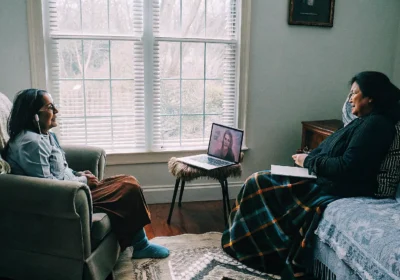

When a relationship feels strained, even arranging help can become another source of tension. Online couples therapy Virginia partners can access gives them a structured place to slow down, describe what is happening, and practice different responses without traveling to an office. Before beginning, both partners should understand the practical details, privacy limits, therapist’s role, and situations in which virtual joint sessions may not be appropriate.
Contact Renewal of the Mind to ask about online couples therapy and therapist availability.
Renewal of the Mind provides HIPAA-compliant telehealth and in-person care through a team of 19+ mental health professionals serving Virginia. The practice takes a collaborative, individualized approach. Therapy can support reflection and skill building, but it cannot promise a particular relationship outcome.
How does online couples therapy in Virginia work?
In brief: Online couples therapy is a live video appointment in which a clinician meets with both partners, clarifies shared and individual concerns, and helps them work toward agreed-upon goals. Partners typically join from a private Virginia location using a secure link.
The work is more structured than simply talking through the week’s latest disagreement. A therapist observes the interaction that unfolds between partners, including how each person signals distress, protects themselves, pursues connection, withdraws, or tries to repair a rupture. The clinician may pause an exchange, help each partner identify the emotion beneath a reaction, and invite a more direct response.
Before the appointment
The practice provides scheduling and intake instructions. Both partners may need to complete paperwork covering contact information, relevant history, informed consent, telehealth procedures, and privacy. Because clinicians are licensed by state, everyone should confirm where each partner will physically be during the appointment. A Virginia clinician generally needs clients to be located in a jurisdiction where the clinician is authorized to practice.
During the appointment
Partners can join from the same room or, when clinically appropriate and arranged in advance, separate locations. The therapist sets expectations for taking turns, handling interruptions, and raising difficult topics. Couples may discuss recurring conflict, trust, parenting, intimacy, separation decisions, cultural or faith concerns, or stress from work and major life transitions.
Explore the practice’s telehealth therapy options and broader psychotherapy services before scheduling.
What should you expect from the first session?
In brief: The first session is an assessment and planning conversation, not a test of which partner is right. Expect the therapist to ask what brought you in, how the problem affects each of you, what has already been tried, and what each partner wants from therapy.
A clinically useful first appointment makes room for two valid perspectives. A therapist may ask each partner to describe the same event because the differences often reveal the relationship pattern more clearly than the event itself. For example, one partner may experience repeated questions as pressure, while the other experiences silence as rejection. The purpose is not to declare a winner. It is to understand the cycle that keeps both people stuck.
Questions a therapist may explore
- What prompted you to seek support now?
- When did the current pattern begin, and what tends to trigger it?
- What helps conflict settle, and what makes it intensify?
- Are there safety, coercion, substance use, or mental health concerns that affect treatment planning?
- What would meaningful progress look like to each partner?
The therapist should also explain confidentiality, documentation, telehealth procedures, cancellation policies, fees, and how communication outside sessions is handled. Couples should ask whether the clinician ever schedules individual check-ins and, if so, how information disclosed privately is managed. Policies differ, so clarity at the beginning helps prevent misunderstandings later.
Review accepted insurance and payment information before your first appointment.
Why do couples seek online support?
In brief: Couples often seek therapy when familiar coping strategies no longer resolve a recurring concern. The presenting problem may be communication, but therapy also considers the stress, beliefs, attachment needs, and life circumstances shaping that communication.
Relationship distress rarely exists in isolation. Financial pressure, caregiving, immigration or acculturation experiences, parenting, grief, trauma histories, health changes, and demanding schedules can all affect how partners interpret and respond to one another. A culturally responsive therapist does not assume every couple shares the same values, family structure, gender roles, faith practices, or definition of commitment.
Common reasons to begin
- Recurring arguments that follow a predictable pattern.
- Emotional distance, loneliness, or difficulty rebuilding connection.
- Trust concerns, including the impact of infidelity.
- Parenting disagreements or blended-family stress.
- Decisions about commitment, separation, or major transitions.
- Difficulty discussing intimacy, boundaries, money, or extended family.
- The relationship impact of anxiety, depression, grief, trauma, or addiction.
Starting therapy does not mean a relationship has failed. Some couples begin before a major transition, while others seek help after years of strain. The appropriate goals depend on the partners’ circumstances and consent. In some cases, the goal is improving connection. In others, it may be making a thoughtful decision or communicating more safely during a separation.
How can couples protect privacy during virtual sessions?
In brief: A secure therapy platform protects the connection, but partners also need to protect the physical space around them. Choose a private room, reduce interruptions, use a trusted device and network, and agree not to record the session.

Renewal of the Mind uses HIPAA-compliant telehealth for remote sessions. Technology is only one part of confidentiality, however. A family member in the next room, a workplace computer, or a voice assistant can create privacy concerns even when the video platform itself is secure.
A practical privacy checklist
- Join from a room where others cannot overhear.
- Silence smart speakers and notifications, then close unrelated applications.
- Use headphones if partners are joining from separate locations or other people are nearby.
- Confirm how the therapist will reach you if the connection drops.
- Keep a backup location in mind in case privacy changes unexpectedly.
- Avoid recording sessions unless everyone, including the clinician, has explicitly agreed.
Before beginning, ask the therapist to explain the limits of confidentiality. Clinicians may be legally required to act when there is a concern about imminent harm, abuse, or another mandated-reporting situation. Because a couple is composed of two clients in a shared treatment setting, it is also important to understand the clinician’s policy on information one partner shares outside a joint session.
Is virtual couples therapy the right fit?
In brief: Virtual care may fit when both partners can participate voluntarily, access a private space, use video reliably, and discuss concerns without the remote setting increasing risk. A consultation helps determine whether joint telehealth, in-person care, individual support, or another resource is more appropriate.
Convenience matters, especially for partners balancing work, caregiving, traffic, or mobility concerns. It should not be the only factor. The therapist also considers safety, each person’s willingness to participate, the severity of the concerns, access to privacy, and whether the clinician can respond appropriately if a crisis occurs during a remote session.
| Virtual care may fit when | Discuss alternatives with a clinician when |
|---|---|
| Both partners freely agree to participate. | One partner feels coerced, monitored, or unsafe. |
| Each person has a private, reliable place to join. | Privacy cannot be maintained. |
| Technology is stable enough for meaningful conversation. | Connection problems repeatedly interrupt assessment or regulation. |
| Partners can follow a plan for pausing heated exchanges. | Conflict is escalating or includes threats or violence. |
| The clinician is licensed to serve the partners’ locations. | A partner will regularly be outside the clinician’s authorized jurisdiction. |
Safety deserves direct attention
Conjoint couples therapy may not be appropriate when there is active intimate partner violence, coercive control, fear of retaliation, or an inability to speak freely. A joint session can conceal risk or create consequences after the call ends. If you are unsure, ask for a confidential screening or guidance about safer resources. If there is immediate danger, call 911. People in the United States can also contact the National Domestic Violence Hotline at 800-799-SAFE or text START to 88788.

How do you choose an online couples therapist in Virginia?
In brief: Choose a therapist whose license, clinical experience, communication style, and telehealth policies fit both partners’ needs. A strong initial consultation should leave each person with a clearer understanding of the process, even if more time is needed to assess fit.
Credentials matter, but fit is not simply whether the therapist seems friendly. Couples work requires a clinician who can hold two perspectives without turning sessions into a debate. The therapist should be able to describe how they assess relationship patterns, set goals, respond when conflict escalates, and determine whether joint treatment remains appropriate.
Questions to ask during a consultation
- Are you licensed to provide therapy where both partners will be located?
- What experience do you have with our main concerns and relationship context?
- How do you structure the first few sessions and measure progress?
- How do you manage individual disclosures within couples treatment?
- What happens if one partner wants to stop or the relationship goal changes?
- How do you approach culture, language, faith, gender, and family expectations?
- What are the fees, insurance procedures, cancellation policy, and scheduling options?
Renewal of the Mind’s team includes 19+ mental health professionals with more than 70 years of combined experience. The practice offers multilingual services and support for relationship concerns, family conflict, divorce, parenting challenges, acculturation, trauma, anxiety, and other concerns that may affect a partnership. Review the practice and team to learn more.
How can partners prepare for a productive session?
In brief: Preparation does not require rehearsing a perfect explanation. Each partner can identify one concern, one hope, and one example of the interaction pattern they want help understanding.
A productive session depends less on presenting a persuasive case and more on staying curious about the pattern both people help create. Before the appointment, consider what happens inside you during conflict. Do you become urgent, quiet, defensive, analytical, or eager to end the conversation? Those reactions often protect something important, such as a need for reassurance, respect, autonomy, or emotional safety.
Try this short preparation exercise
- Name the situation without assigning motives. Example: “Our plans changed at the last minute.”
- Describe your internal response. Example: “I felt unimportant and became critical.”
- Notice the cycle. Example: “You withdrew, and I pushed harder.”
- State a workable hope. Example: “I want us to discuss changes without either person shutting down.”
This language does not guarantee a calm conversation. It gives the therapist more useful information than broad accusations and helps identify where a different response might interrupt the cycle.
Frequently asked questions about online couples therapy
Can partners join an online couples session from different locations?
Sometimes. Separate locations can improve access, but the therapist must consider licensing, privacy, safety, and platform logistics. Tell the practice where each partner will be physically located before the appointment.
Does insurance cover online couples therapy?
Coverage depends on the plan, diagnosis requirements, clinician, service, and other policy terms. Couples should contact their insurer and review Renewal of the Mind’s insurance information. The practice can explain its billing procedures but cannot guarantee that a plan will cover care.
What if one partner is unsure about therapy?
Ambivalence is common and can be discussed openly. A consultation can clarify what therapy involves and what concerns the hesitant partner has. Participation should be voluntary. A therapist cannot promise to change one partner or force agreement.
How long does online couples therapy take?
There is no universal timeline. The length and frequency of care depend on the concern, goals, safety, participation, and clinical assessment. Ask the therapist how progress will be reviewed and when the treatment plan may change.
Take the next step with care
In brief: The best next step is a conversation about fit, not a commitment to a predetermined outcome. Renewal of the Mind can explain availability, telehealth procedures, and which clinician may be appropriate for your needs.
Contact Renewal of the Mind to schedule a consultation for online couples therapy in Virginia.
This article is for general educational purposes and is not a substitute for professional mental health assessment, diagnosis, or treatment. Virtual couples therapy may not be appropriate in every situation. If you are in immediate danger, call 911. If you are experiencing a mental health crisis in the United States, call or text 988.