
EMDR vs Talk Therapy for Trauma: How to Choose the Right Fit
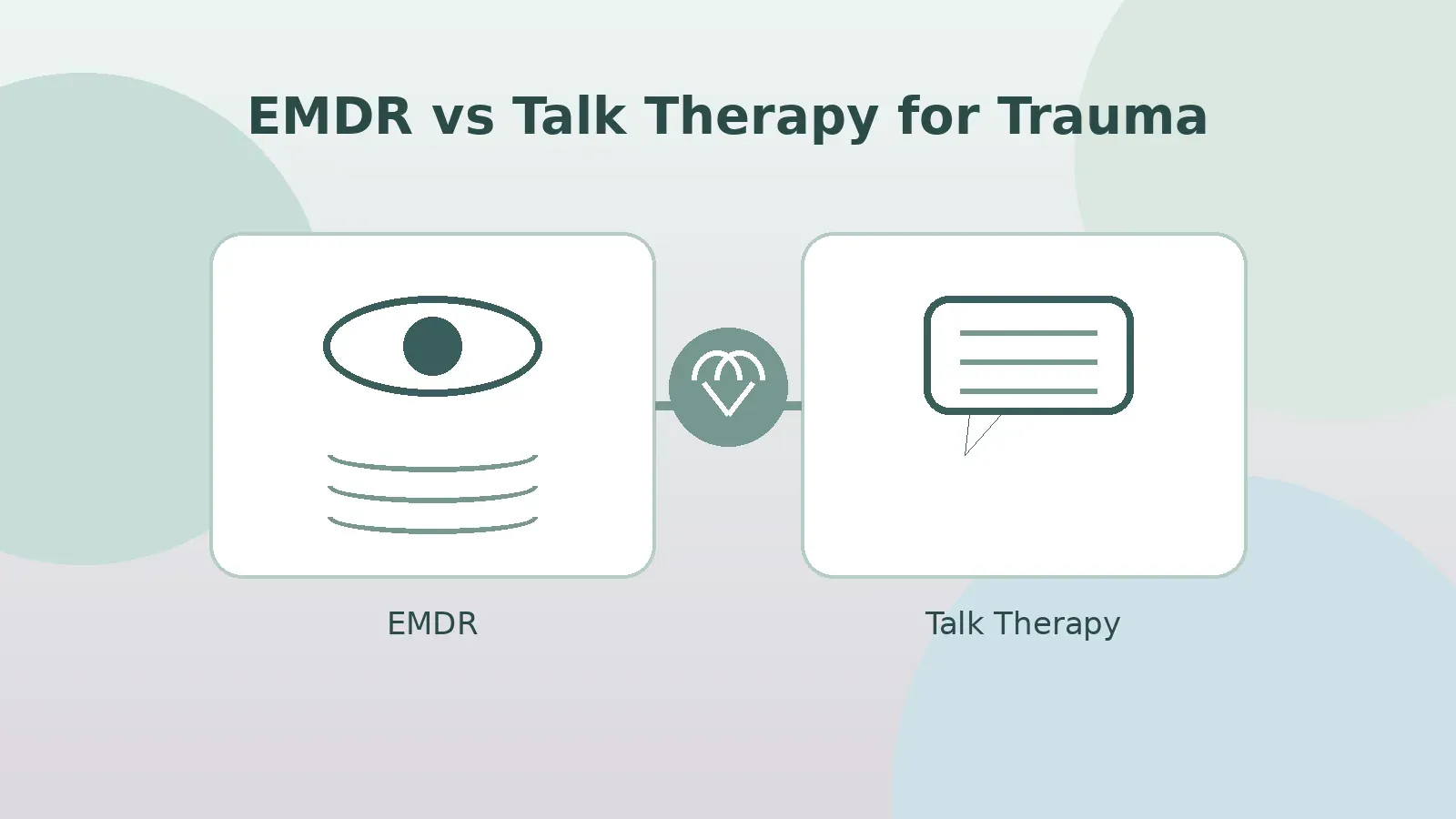
If you are comparing EMDR vs talk therapy for trauma, you may be asking a very practical question: which type of therapy can help me feel safer, less stuck, and more able to move through daily life? Both approaches can support trauma recovery, but they work in different ways. EMDR focuses on how distressing memories are stored and reprocessed, while talk therapy often focuses on understanding experiences, building coping skills, and changing patterns over time.
If trauma symptoms are affecting your relationships, sleep, work, or sense of safety, learn about EMDR therapy in Fairfax, VA or contact Renewal of the Mind to discuss what type of support may fit your needs.
There is no single best therapy for every trauma survivor. The right fit depends on your symptoms, your readiness to work with difficult memories, your therapy goals, your support system, and the relationship you build with your therapist. This guide explains how EMDR and traditional talk therapy differ, when each may be helpful, and how a trauma-informed clinician may help you decide.
Quick Answer: How EMDR and Talk Therapy Differ
EMDR, short for Eye Movement Desensitization and Reprocessing, is a structured trauma therapy that helps the brain reprocess distressing memories while the client briefly focuses on aspects of the memory and experiences bilateral stimulation, such as guided eye movements, taps, or tones. The American Psychological Association describes EMDR as an eight-phase therapy for post-traumatic stress disorder that can reduce the vividness and emotional intensity of traumatic memories.
Talk therapy is a broad term. It can include supportive therapy, psychodynamic therapy, cognitive behavioral therapy, cognitive processing therapy, trauma-focused CBT, interpersonal therapy, and other approaches that use conversation, reflection, skill building, and therapeutic relationship to support change. Some forms of talk therapy are trauma-focused and structured, while others are more open-ended and exploratory.
| Question | EMDR | Talk Therapy |
|---|---|---|
| Main focus | Reprocessing distressing memories and present triggers | Understanding experiences, emotions, beliefs, relationships, and coping patterns |
| How sessions often feel | Structured, focused, and memory-targeted | Conversational, reflective, skills-based, or insight-oriented |
| Level of detail required | Often does not require describing trauma in extensive detail | May involve more discussion of experiences, depending on the method |
| Best fit may include | Specific traumatic memories, intrusive images, body-based distress, PTSD symptoms | Ongoing stress, relationship patterns, grief, anxiety, identity concerns, coping skills |
What Is EMDR Therapy?
EMDR is a trauma-focused therapy developed to help people process experiences that still feel emotionally charged or physically activating. A client does not simply talk through a memory from beginning to end. Instead, the therapist helps identify a target memory, the emotions and body sensations connected to it, and a more adaptive belief the client would like to strengthen.
During the reprocessing phase, the client briefly holds parts of the memory in mind while following bilateral stimulation. The goal is not to erase the past. The goal is to help the memory become less overwhelming so it can be integrated into the person s life story without the same level of emotional intensity.
EMDR is commonly discussed for PTSD and trauma symptoms, but it should still be tailored to the individual. At Renewal of the Mind, EMDR therapy is one part of a broader trauma-informed care model that may also include grounding skills, emotional regulation, psychoeducation, and collaboration around pacing.
The Eight Phases of EMDR
EMDR is often described as an eight-phase therapy. The phases include history taking, preparation, assessment, desensitization, installation, body scan, closure, and reevaluation. Preparation matters. A therapist may spend time helping you build coping strategies before beginning memory reprocessing, especially if trauma symptoms feel intense or if daily life is unstable.
This structure is one reason EMDR can feel different from traditional talk therapy. Sessions may have a clear target and sequence. Some people appreciate that focus. Others may need more time in talk therapy first to build trust, understand their symptoms, or feel ready for trauma processing.
What Is Talk Therapy for Trauma?
Talk therapy for trauma is not one single method. It can include evidence-based approaches such as trauma-focused cognitive behavioral therapy, cognitive processing therapy, or other modalities that help people understand trauma responses, identify beliefs shaped by trauma, practice coping skills, and strengthen relationships.
In traditional talk therapy, you may discuss what happened, how it affects you now, what situations trigger distress, and what patterns you want to change. A therapist may help you name emotions, work with shame or self-blame, build boundaries, improve communication, or reconnect with parts of life that trauma has narrowed.
For some clients, talk therapy is the safest starting point because it allows time to build trust and develop emotional regulation. For others, talk therapy alone may feel like it helps them understand their trauma but does not fully reduce the body-level distress connected to certain memories. In those cases, a therapist may discuss whether a trauma-specific approach such as EMDR therapy for PTSD symptoms could be appropriate.
Does EMDR Work Better Than Talk Therapy?
EMDR does not universally work better than talk therapy. Research supports several trauma-focused treatments, and different people respond differently. The National Institute of Mental Health notes that PTSD treatment may include psychotherapy, medication, or both, and that treatment plans should be based on individual needs.
The more useful question is: better for what goal, at what time, and for which person? EMDR may be a strong fit when a client has specific memories or triggers that remain highly distressing. Talk therapy may be a strong fit when a client wants to understand patterns, process complex relationships, build coping skills, or work through grief, anxiety, depression, identity concerns, or ongoing stress alongside trauma.
Many clients benefit from a combination over time. For example, a therapist may begin with talk therapy to build safety and coping skills, use EMDR to process specific trauma memories, then return to talk therapy to support relationships, meaning making, and future goals.
When EMDR May Be a Good Fit
EMDR may be worth discussing with a therapist if you notice that certain memories, images, sounds, smells, or body sensations still feel unusually intense. You may logically know the event is over, but your nervous system reacts as if danger is still present. EMDR is designed to work with this kind of stuck emotional and sensory material.
- You experience intrusive memories, flashbacks, or nightmares.
- You feel strong physical reactions when reminded of a past event.
- You avoid places, conversations, or situations connected to trauma.
- You have worked in talk therapy but still feel activated by specific memories.
- You prefer an approach that may not require recounting every detail out loud.
If these patterns sound familiar, you can review Renewal of the Mind s EMDR therapy services and speak with a clinician about whether EMDR is clinically appropriate for you.
EMDR still requires readiness. A therapist may first assess emotional regulation, dissociation, current safety, substance use, crisis risk, and support systems. If life feels unstable, preparation may be the first phase of care rather than immediate memory processing.
When Talk Therapy May Be a Better Starting Point
Talk therapy may be the better starting point when you want space to understand your story, build trust with a therapist, and develop coping tools before directly processing trauma memories. This is especially common for people with complex trauma, ongoing family stress, relationship concerns, grief, or anxiety that is not tied to one clear event.
- You are not sure what you want to work on yet.
- You need help naming emotions, setting boundaries, or making sense of patterns.
- You feel overwhelmed by the idea of trauma processing.
- You are managing current stressors that make stabilization the first priority.
- You want support for relationships, parenting, identity, work stress, or life transitions.
Renewal of the Mind offers psychotherapy in Fairfax, VA for individuals, couples, families, and groups. Talk therapy can be supportive, structured, trauma-informed, or skills-based depending on your needs and your therapist s clinical approach.
How a Therapist Helps You Choose
A trauma-informed therapist does not simply ask, EMDR or talk therapy? A careful assessment looks at what you are experiencing now, what you have tried before, how your body responds to stress, and what kind of pace feels manageable.
1. Symptoms and Triggers
If the main concern is a specific memory that causes intense distress, EMDR may be considered. If the main concern is a long-standing pattern of self-criticism, relationship conflict, anxiety, or difficulty trusting others, talk therapy may be the first step or the ongoing foundation.
2. Safety and Stability
Trauma work should be paced carefully. Before deeper processing, a therapist may want to understand current safety, self-harm risk, crisis concerns, substance use, sleep, support, and ability to use grounding skills. If stabilization is needed, that is not a failure. It is part of responsible trauma care.
3. Readiness to Approach Memories
Some people want to process memories directly. Others need time before approaching them. A good fit is not only about the method. It is also about timing. You should be able to ask questions, slow down, and collaborate with your therapist.
4. Treatment Goals
Your goals may include fewer nightmares, less avoidance, better emotional regulation, improved relationships, reduced shame, or greater ability to function at work or school. Different goals may call for different tools. Trauma treatment can also change over time as you gain stability and clarity.
Can EMDR and Talk Therapy Be Combined?
Yes, EMDR and talk therapy can often be combined when clinically appropriate. Many therapists integrate preparation, psychoeducation, emotional regulation, and reflective conversation before and after EMDR reprocessing. EMDR does not replace the therapeutic relationship. The relationship still matters because trauma recovery often requires trust, consent, pacing, and collaboration.
For example, a client might use talk therapy to understand how trauma affects boundaries and relationships, use EMDR to process a specific distressing memory, then use ongoing therapy to practice new choices in daily life. This integrated approach can be especially useful when trauma has affected both the nervous system and the person s beliefs about self, others, and safety.
Questions to Ask Before Starting Trauma Therapy
Before beginning EMDR or talk therapy for trauma, it is reasonable to ask practical and clinical questions. Your therapist should be able to explain their approach in clear language.
- What experience do you have working with trauma?
- Do you offer EMDR, trauma-focused CBT, or other trauma-informed approaches?
- How will we decide whether I am ready for memory processing?
- What coping skills will we practice before deeper trauma work?
- What should I expect between sessions?
- How will we adjust if I feel overwhelmed?
- Do you accept my insurance, or can you explain payment options?
Renewal of the Mind has a team of licensed and supervised clinicians serving Fairfax and Northern Virginia, with trauma therapy options that include EMDR, Trauma-Focused CBT, and other counseling approaches. You can also review trauma therapy options, CBT and TF-CBT services, and insurance information when planning care.
FAQ: EMDR vs Talk Therapy for Trauma
Is EMDR only for PTSD?
EMDR is best known for PTSD and trauma-related distress, but therapists may use EMDR-informed treatment for other distressing experiences when appropriate. A clinician should assess your symptoms, history, and readiness before recommending it.
Do I have to talk about every detail of my trauma in EMDR?
Not usually. EMDR often does not require a detailed verbal description of the traumatic event. You may still discuss enough information for your therapist to understand the target memory and keep the work safe and focused.
Can talk therapy help trauma without EMDR?
Yes. Many people benefit from trauma-informed talk therapy, especially when it includes coping skills, emotional regulation, cognitive work, and a strong therapeutic relationship. Some clients later add EMDR, while others continue with talk therapy as their primary approach.
How long does trauma therapy take?
The length of therapy varies. It depends on the type of trauma, current symptoms, support systems, treatment goals, and whether trauma is connected to one event or many experiences over time. A therapist can help you set realistic expectations after an assessment.
Choosing Support in Fairfax, VA
Choosing between EMDR and talk therapy is not about picking the most impressive-sounding method. It is about finding the approach, therapist, and pace that fit your nervous system and your goals. EMDR may help when specific memories or triggers remain highly distressing. Talk therapy may help when you need understanding, coping skills, relationship support, and a steady place to process what happened. Many people need both at different points in healing.
Renewal of the Mind provides trauma-informed therapy in Fairfax, VA, with in-person and telehealth options for clients across Virginia. If you are unsure where to begin, a therapist can help you explore symptoms, readiness, and treatment options without pressure or promises.
To take the next step, book an appointment or contact Renewal of the Mind to ask about EMDR, psychotherapy, and trauma therapy options in Northern Virginia.
This article is for educational purposes only and is not a substitute for mental health care, diagnosis, or treatment. If you are in immediate danger or experiencing a crisis, call 911 or contact a local crisis resource right away.